How to create a reset corner starts with understanding its purpose. A reset corner is a small, intentional space designed to help you slow down and step away from constant input. It doesn’t require a spare room, expensive furniture, or a full home redesign — only clarity about what the space is for.
In a digital world filled with notifications, background noise, and constant stimulation, a reset corner creates a physical boundary. It gives your mind somewhere to pause.
This guide explains how to create a reset corner anywhere — inside, outside, large space or small.
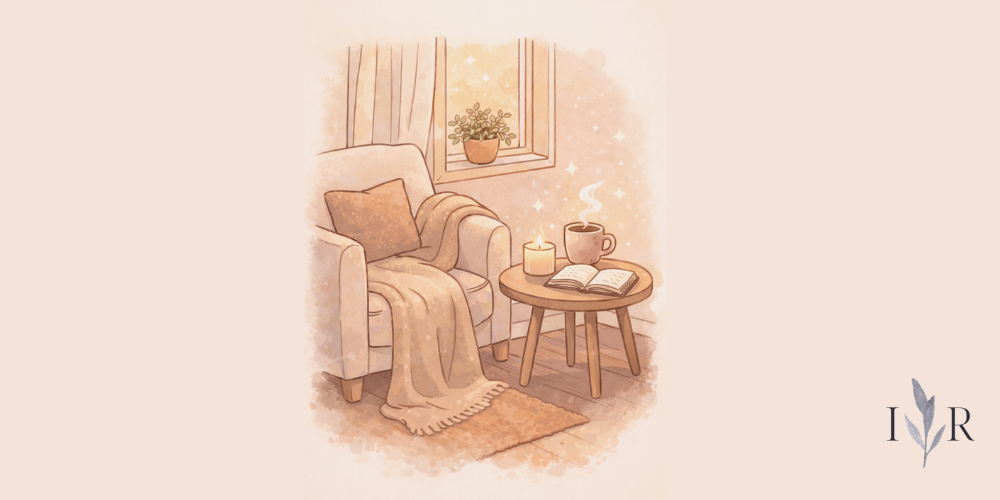
What Is a Reset Corner?
A reset corner is not a themed aesthetic. It is not a perfectly styled Pinterest setup. It is a functional pause point.
Its purpose is simple:
To reduce input.
To create stillness.
To give your mind a clear stopping place.
That might look like:
• A chair by a window
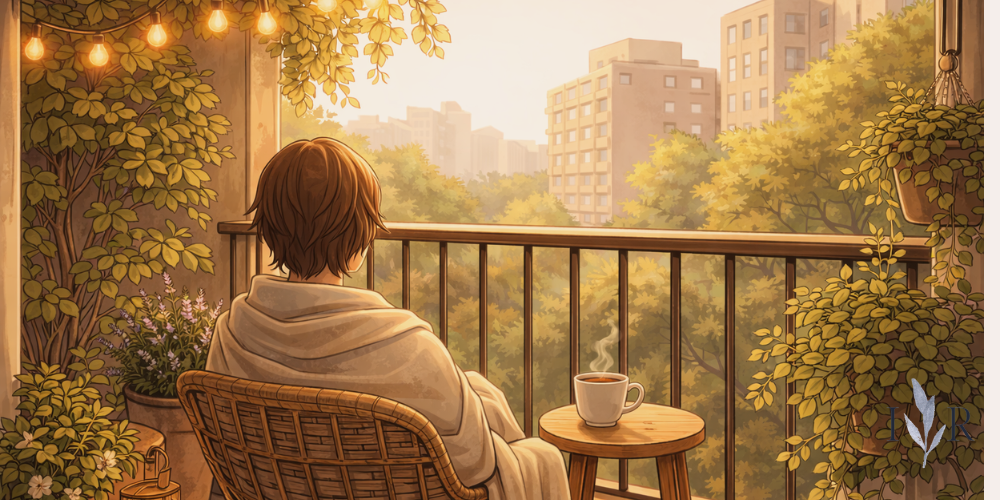
• A balcony setup
• A corner of your bedroom
• A garden lounger
• A quiet car space
The location matters less than the intention.
If you’re new to the concept, start with the basics here:
How to Create a Reset Corner in Any Room
The Core Elements of Every Reset Corner
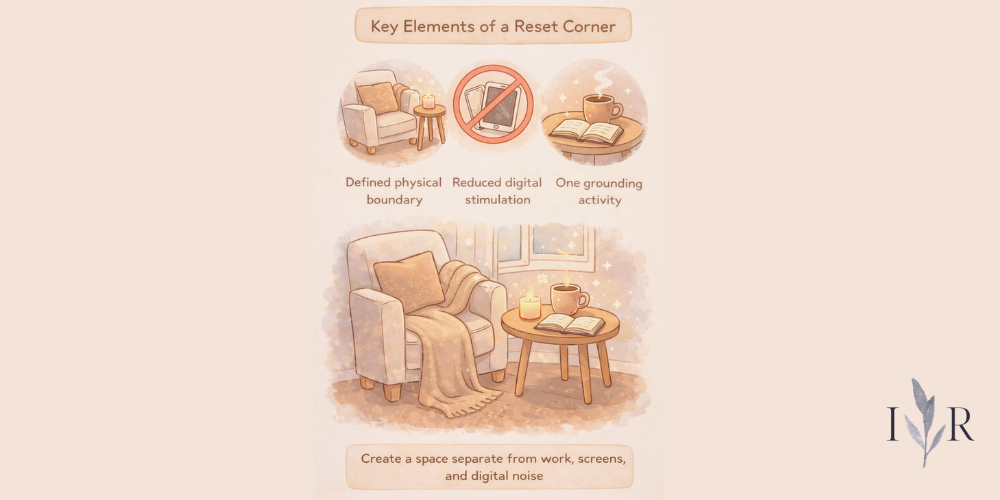
Every effective reset corner includes three things:
- A defined physical boundary
- Reduced digital stimulation
- One grounding activity
The boundary could be as small as a chair and side table. The key is that it feels separate from work, scrolling, or daily noise.
You don’t need to buy anything to begin. If budget is a concern, read:
Creating a Reset Corner Without Buying Anything
Bedroom Reset Corners
Bedrooms are one of the easiest places to create a reset space. The goal is to separate rest from stimulation.
That might mean:
• Sitting upright with cushions instead of lying down
• Keeping your phone out of reach
• Using soft lighting instead of overhead brightness
A bedroom reset corner works best when it is not used for scrolling.
For a full guide, see:
How to Create a Reset Corner in Your Bedroom
Balcony Reset Nooks
Balconies are ideal because they create natural separation. Even small outdoor areas can become reset spaces.
The key factors:
• A comfortable seat
• Minimal distractions
• A clear purpose (reading, journaling, sitting quietly)
If you have outdoor space available, this guide walks you through it:
Outdoor and Garden Reset Spaces
Outdoor reset spaces often feel more powerful because they reduce artificial stimulation automatically.
A lounger in the sun.
A chair under a tree.
A quiet patch of grass.
The goal isn’t perfection. It’s presence.
For ideas on building a reset space outside:
Nooks in the Sun: How to Create a Reset Space Outside
Why Reset Corners Work
Reset corners work because they create contrast.
Most of the day is reactive.
Messages. Screens. Tasks. Noise.
A reset corner is proactive.
It is chosen.
It is intentional.
Research in environmental psychology shows that physical surroundings — including lighting, layout and noise levels — influence stress and attention. When your environment signals pause, your behaviour changes more easily.
How to Start Today
You do not need:
• A large home
• New furniture
• A full plan
You need one defined space.
Choose a corner.
Remove digital noise.
Add one grounding action.
That is enough to begin.
Expanding Your Reset Corner
Once you have the basics, you can refine:
• Add seasonal changes
• Adjust lighting
• Introduce texture
• Build a small routine around it
The reset corner grows with you.
Final Thought
A reset corner is not about aesthetics. It is about boundaries.
In a world designed to keep you stimulated, it gives you somewhere to stop.
And that pause changes more than you expect.
