One of the biggest misconceptions about creating a reset corner is that you need to buy things first.
You don’t.
In fact, my reset corner didn’t begin with everything new. It began with a decision. A decision to stop sitting in places that distracted me, and start sitting in places that allowed me to think.
The space already existed. I just hadn’t claimed it yet.
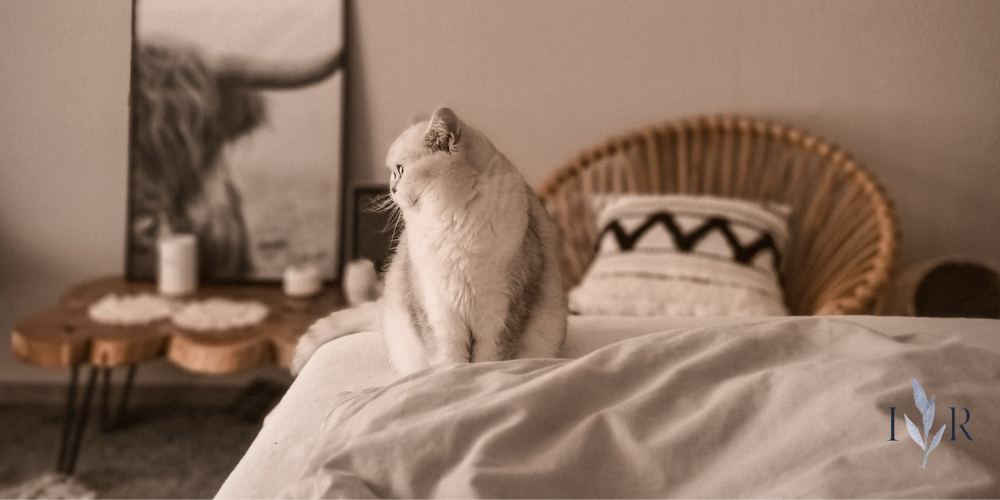
Your reset corner is not about objects. It’s about permission.
Most homes already have everything needed for a reset corner. A bed. A chair. A corner of a room. A place near a window.
The problem isn’t the lack of things. It’s the lack of intention.
Before I created my reset corner, I had the same bed, the same cushions, the same room. But I used every space automatically. The bed was for sleep. The sofa was for watching TV. My desk was for work.
There was nowhere that existed purely for being still.
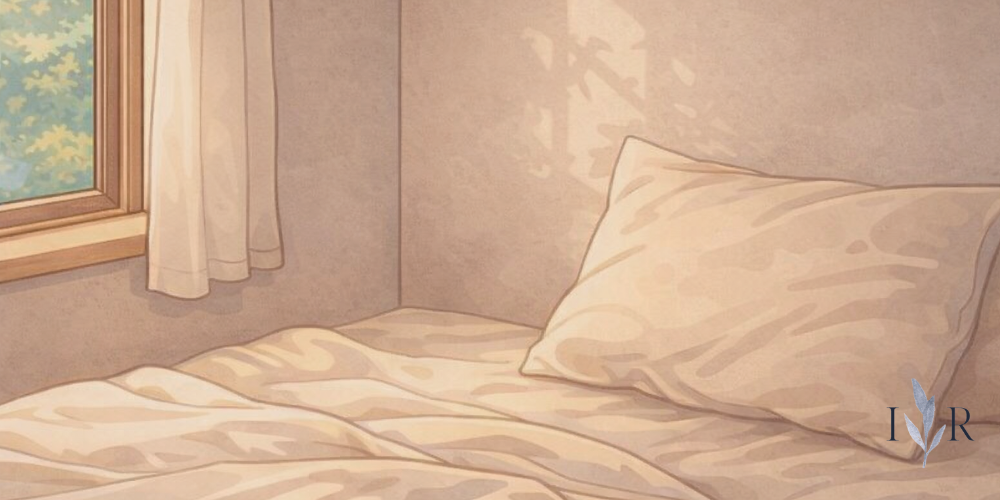
Once I started using my bed differently, everything changed. I’d move a blanket into place. Sit upright instead of lying down. Sometimes just sit there with a tea and look out the window.
Nothing new had been added. But the space became something else entirely.
It became a reset point.
The most powerful reset corners are often the simplest
There’s something important that happens when you use what you already have. It removes friction. It removes delay.
You don’t have to wait for something to arrive. You don’t have to prepare. You can start immediately.
Some of the most effective reset moments I’ve had involved nothing more than sitting on my bed with natural light coming through the window.
No perfect lighting. No special setup. Just stillness.
Your brain doesn’t need decoration to reset. It needs absence of distraction.
Your environment teaches your brain how to behave
Before I created a reset corner, my brain associated every space with stimulation. The living room meant TV. My phone meant input. My desk meant work.
There was nowhere that meant calm.
When I started sitting in one specific place without distraction, my brain adapted surprisingly quickly. That space became associated with thinking. With clarity. With rest.
Now, when I sit there, my mind settles faster. Not because I force it, but because it recognises the environment.
This is how environment shapes behaviour quietly over time.
You can create a reset corner in minutes
Look around your home.
A bed can become a reset corner instantly, especially if you’re creating a reset corner in your bedroom. Sit upright instead of lying down. Bring a blanket if it helps you feel comfortable. Let natural light reach you.
A chair can become a reset corner. Simply sit in it without turning on the TV or picking up your phone.
Even the floor can work. Lean against a wall. Sit near a window.
The space itself isn’t what matters most. The absence of stimulation is what creates the reset.
The biggest change happens internally
When I first started doing this, I noticed how much mental noise I had been carrying.
Thoughts that never settled. Ideas that never finished forming. A constant sense of mental movement.
Sitting in a reset corner allowed those thoughts to complete themselves. Writing helped too, but even without writing, stillness alone created clarity.
Over time, I began thinking more clearly. Sleeping better. Feeling calmer without trying to force calm.
The reset corner didn’t change my life dramatically overnight. It changed how my mind operated daily.
And that changed everything else naturally.
The mistake most people make
Most people believe calm requires adding something.
But often, calm comes from removing things.
Removing noise. Removing input. Removing constant stimulation.
Your reset corner isn’t defined by what you put into it. It’s defined by what you leave out.
No expectations. No urgency. No distraction.
Just space.
Start with what you already have
You don’t need to buy anything to begin.
Your reset corner might be your bed. Your chair. A place near a window.
Use it intentionally. Return to it often.
Your brain will learn what that space means.
And over time, simply sitting there will begin to reset you.
Not because the space is special.
But because you allowed it to become so.
