Digital fatigue is the quiet exhaustion that builds when too much of life happens through a screen. It isn’t dramatic burnout. It’s more subtle than that. It feels like brain fog, shorter patience, difficulty concentrating, or lying in bed feeling tired but strangely wired.
As work, communication and entertainment have moved online, most of us spend hours each day switching between tabs, apps and notifications. None of these actions seem harmful on their own. But together, they create constant mental stimulation without proper recovery time.
The result is cognitive overload.
What Digital Fatigue Actually Feels Like
One of the reasons digital fatigue is easy to ignore is because it doesn’t always look serious. You may simply notice that your focus isn’t what it used to be. Reading feels harder. Silence feels uncomfortable. You check your phone without realising you’ve picked it up.
Sleep can become lighter. Even after resting, you might wake up feeling as though your mind hasn’t fully powered down. Research shows that evening screen exposure can disrupt sleep patterns.
These are small signals, but they add up. The brain is processing far more input than it was designed to handle continuously. Without pauses, it never properly resets.
Why It’s Becoming So Common
Technology itself is not the enemy. It brings obvious advantages. We can work flexibly, stay connected, learn quickly and access information instantly. Those are genuine benefits.
But there are downsides.
The same tools that make life easier also remove natural stopping points. Messages arrive immediately. Entertainment never ends. There is always another scroll, another update, another alert.
The convenience is a strength. The constant availability is the weakness.
When stimulation has no clear boundaries, the nervous system remains slightly activated all day. Over time, that low-level activation turns into fatigue.
The Role of “Friction”
One way to understand recovery is through the idea of friction.
Digital life is designed to be smooth. Everything is instant. Effort is minimised. That smoothness feels efficient, but it also keeps the brain in reactive mode.
Friction is the opposite. It means doing something that requires a little more effort and attention. Writing by hand instead of typing. Reading a physical book. Sitting without background noise. Preparing something slowly rather than automatically.
These actions are not complicated. They are simply less immediate.
And that small difference changes how your nervous system responds. Friction slows attention just enough to create space.
Pros and Cons of Digital Living
It would be unrealistic to pretend technology is entirely negative. Digital tools have clear advantages. They improve communication, increase access to information and allow flexible work and creativity. For many people, they are essential.
The difficulty arises when there is no balance. The downside of constant digital engagement includes reduced focus, disrupted sleep and an increased sense of mental restlessness. When everything is immediate, patience shortens. When silence disappears, so does recovery.
The goal is not rejection. It is regulation.
How to Recover From Digital Fatigue
Recovery does not require deleting every app or abandoning modern life. It begins with simple boundaries.
Choose one consistent window each day when your phone is not within reach. Even twenty uninterrupted minutes without input can begin retraining your attention span. Use that time for something tactile — reading, journaling, sitting outside, or simply being quiet.
Create one small space that is not associated with screens. This might be a chair, reading spot, or even a small reset corner designed for quiet activities. That physical separation helps the brain distinguish between stimulation and rest.
In the evening, consider softer lighting. Bright white light keeps the brain alert, while warmer tones support natural wind-down. Small environmental changes often have a bigger effect than expected.
The key is consistency. Small changes repeated daily recalibrate the system.
A Simple Starting Point
If digital fatigue feels familiar, begin gently.
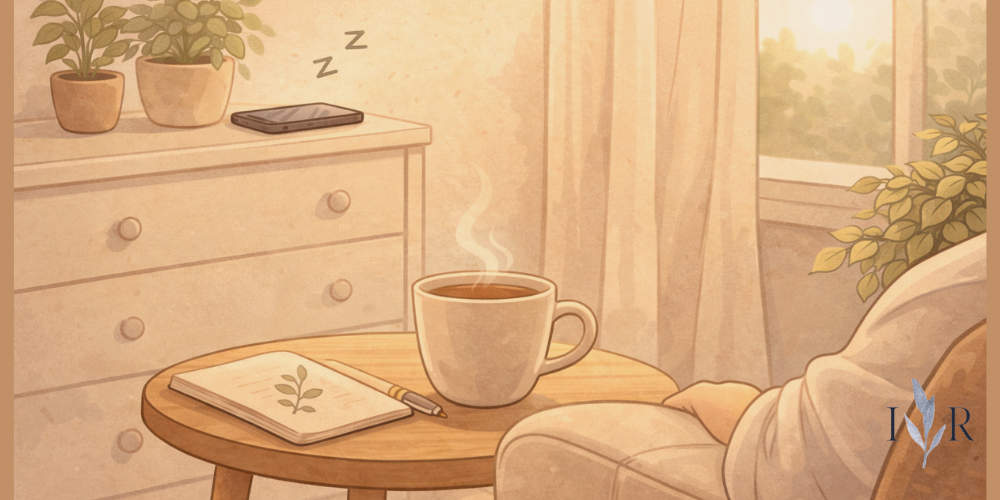
Tomorrow morning, leave your phone in another room while you drink your coffee. Allow a few minutes of silence before filling the space with noise.
It will feel small.
But small interruptions, repeated over time, are what restore clarity.
