Modern life moves quickly. Notifications arrive a lot! Screens compete for attention and quiet moments disappear before they even begin. Many people don’t realise how much mental space is being taken up until the mind begins to feel crowded.
For many, the first sign that life is moving too fast appears when the brain feels busy even during simple tasks. Constant phone use, scrolling and digital noise can make it difficult to concentrate or relax properly, often leading to digital fatigue.
This is often the moment people begin searching for slow living examples — not because they want to change their entire life, but because they want their mind to feel clear again.
Slowing down rarely requires dramatic change. It usually begins with small moments of quiet.
When Life Starts Moving Too Fast
Overwhelm doesn’t usually appear all at once. It builds slowly.
Phone notifications increase. Work tasks stretch longer into the evening. Small responsibilities stack on top of each other. Even moments that should feel restful are filled with background noise, scrolling or multitasking.
Eventually, the mind begins to feel full.
This constant input can easily lead to overstimulation, where the brain struggles to switch off.
One of the most common realisations happens when relaxation becomes difficult. Even sitting down to rest can feel restless, as though the brain is still moving at the pace of the day.
That’s often the signal that something needs to slow down.
Simple Slow Living Examples That Work
Slow living doesn’t mean abandoning responsibilities or dramatically changing your lifestyle. It simply means creating moments where your mind is allowed to settle.
Some of the most effective slow living examples are surprisingly simple.
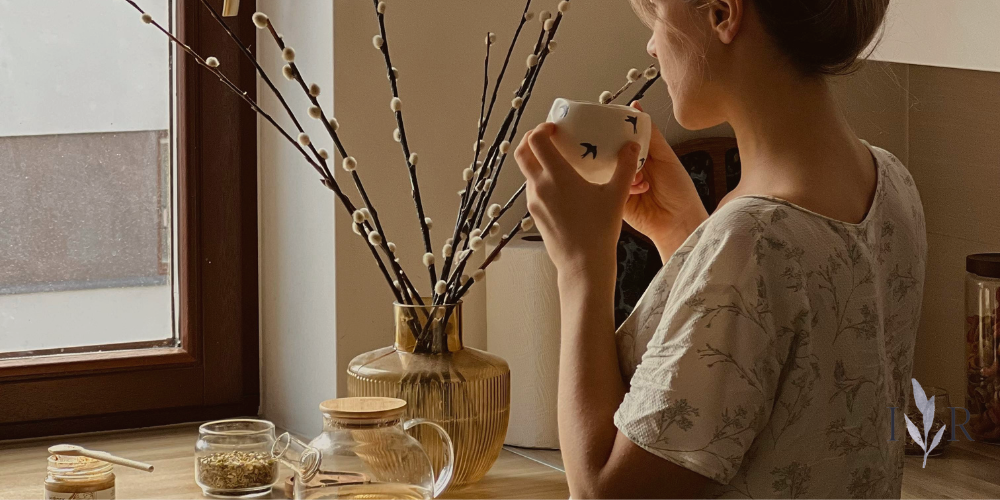
Tea or Coffee Without Your Phone
One of the easiest ways to slow down is to drink tea or coffee without reaching for your phone.
No scrolling. No notifications. Just the quiet moment itself.
Even ten minutes like this can calm the nervous system and reduce the constant flow of information the brain processes every day.
Journaling or Meditation
Writing a few lines in a notebook allows thoughts to leave the mind and settle onto the page. It slows thinking down and creates clarity.
Meditation works in a similar way. Even five minutes of breathing exercises or quiet meditation can reset the mind and create space between thoughts.
Sitting in the Sun
Another powerful slow living example is simply sitting in natural light.
This could be in the garden on a warm day or inside near a window where sunlight reaches the room. Warm light, fresh air and stillness naturally encourage the body to relax.
These moments may feel small, but they allow the mind to step out of the constant digital current.
Walking Without Headphones
Walking is one of the most natural ways to reset mental energy.
Spending time outdoors can naturally slow the mind and bring attention back to the present moment. Even the National Park Service encourages people to spend time in natural spaces and enjoy quiet moments outside.
A quiet walk with the dogs or even a short walk alone without headphones can slow racing thoughts. The rhythm of movement allows the mind to settle without forcing it.
Many people notice their thoughts become clearer simply by walking without stimulation.
Creating Small Spaces for Slowness
Environment plays an important role in slowing down.
Simple changes in a home can make quiet moments easier to access. A reset corner with a blanket and a warm drink, a quiet desk with soft lighting, or a peaceful garden chair can become small anchors of calm throughout the day.
Turning off the television, leaving phones in another room or dimming lights in the evening can also help signal to the brain that it is time to slow down.
These subtle changes create physical reminders that not every moment needs to be filled with stimulation.
How Long Slow Moments Should Last
Slow living moments do not need to be long to be effective.
Five minutes of quiet breathing can help reset the mind. Ten minutes without screens can calm mental noise. Longer periods, such as reading before bed or sitting quietly for half an hour, can deepen that sense of calm.
Over time, these moments often expand naturally.
Some evenings might become an hour of reading. Some mornings might become a peaceful routine before the day begins.
The important part is consistency.
The Real Benefits of Slowing Down
When slow moments become part of daily life, the effects begin to appear quietly.
Many people notice:
- clearer thinking
- better sleep
- fewer anxious thoughts
- more creativity
- improved focus
The mind feels less cloudy and more steady. Tasks become easier to approach because the brain is no longer overloaded with constant input.
Sleep also improves because the mind has been given space to process the day.
Why Screens Make Slowing Down Harder
One of the biggest challenges to slow living today is constant digital stimulation.
Phones provide endless information, entertainment and communication. While useful, they rarely allow the mind to rest.
When screens fill every pause, the brain never fully powers down.
Leaving the phone in another room for even an hour can create a surprising sense of mental relief. That single change often becomes the first step toward a slower rhythm.
A Simple Way to Start Tomorrow
The best slow living examples are the ones that are easy to repeat.
Tomorrow, try something simple:
- Leave your phone in another room for an hour.
- Sit with a cup of tea without scrolling.
- Take a quiet walk without headphones.
- Spend five minutes breathing or meditating.
Small pauses like these help the mind reset. Slow living is not about doing less with your life. It’s about creating enough space to experience it clearly again.
And sometimes, that begins with just a few quiet minutes.
